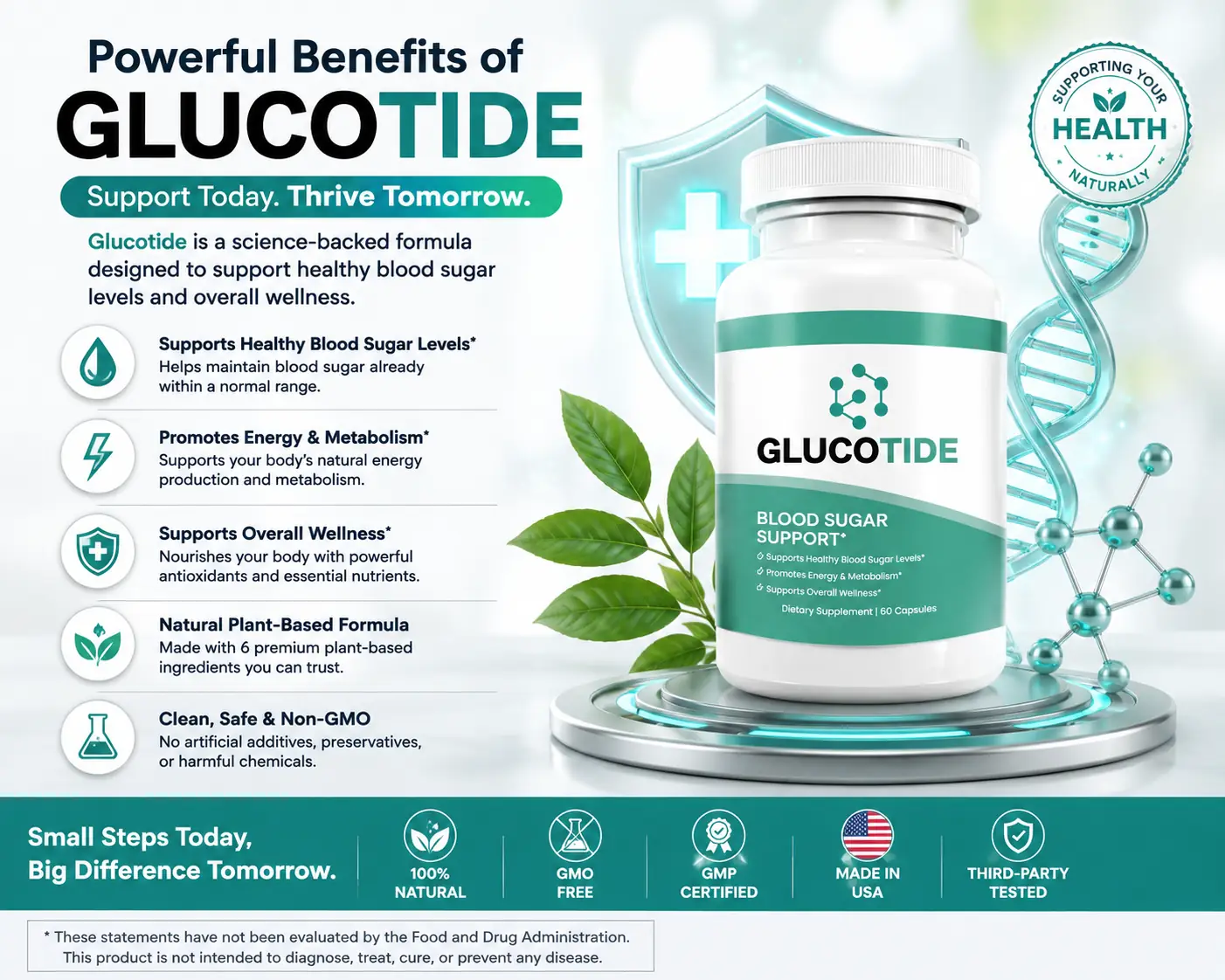
Most blood sugar supplements lean on one headline ingredient and pad the rest of the label with filler. Glucotide takes a different structure — seven core nutrients at verified doses, layered with a 12-ingredient botanical blend. Here's exactly what's inside, and why, including the disclosure that matters most. We'll go label line by label line, so you know exactly what you're taking and why each piece is there, rather than relying on marketing language alone.
Two Tiers: Core Nutrients & Blend
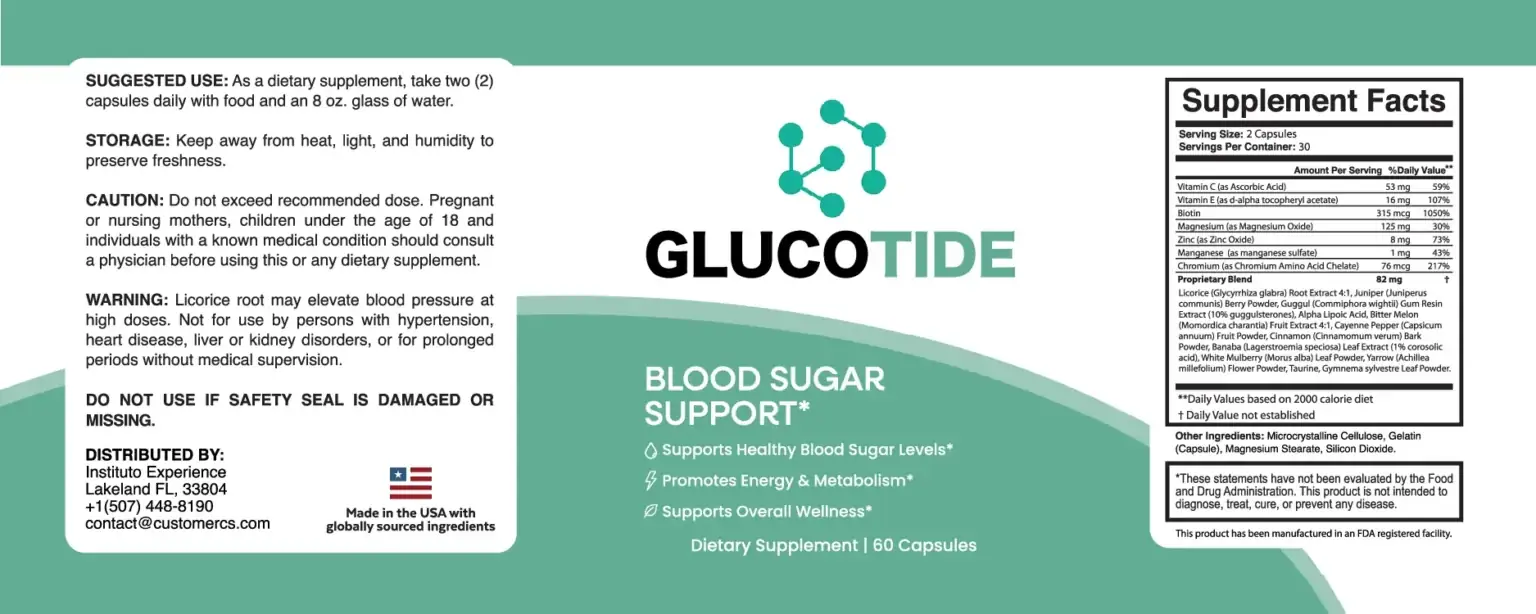
The label is organized into two distinct tiers. The first is seven core nutrients, each listed with an exact milligram or microgram amount and a percentage of daily value — no guessing involved. The second is an 82 mg blend of twelve botanicals and compounds, listed by name in descending order but without individual amounts, which is standard practice for proprietary blends across the supplement industry.
This two-tier structure is intentional. The core nutrients are dosed at levels backed by established daily value research, so there's no ambiguity about what you're getting. The blend, by contrast, draws on a longer tradition of botanical use in metabolic support — ingredients that have been used individually and in combination for generations, even where modern clinical dosing standards are less codified. Separating the two lets you evaluate each on its own terms.
The 7 Core Nutrients
Chromium (76 mcg, 217% DV) is one of the most researched minerals for supporting insulin sensitivity and healthy blood sugar levels — its high relative dose reflects that central role in this formula.
Biotin (315 mcg, 1050% DV) is dosed notably high, tied to its documented role in energy and glucose metabolism.
Magnesium (125 mg, 30% DV) supports hundreds of enzymatic processes, several of which relate directly to insulin function.
Zinc (8 mg, 73% DV) is involved in insulin storage and release within the body.
Manganese (1 mg, 43% DV) supports normal carbohydrate metabolism.
Vitamin C (53 mg, 59% DV) and Vitamin E (16 mg, 107% DV) are both antioxidants that support broader cellular and metabolic health as part of the formula. Together, these seven nutrients form the measurable backbone of the label — the part where dosing precision matters most, because deficiencies in minerals like magnesium, zinc and chromium have each independently been linked to impaired glucose regulation.
The 12-Botanical Blend
Cinnamon Bark Powder and Bitter Melon Fruit Extract are two of the most widely used botanicals in traditional blood sugar support formulas, both with long histories of use in this category. Banaba Leaf Extract (standardized to 1% corosolic acid) and Gymnema Sylvestre Leaf Powder are traditionally associated with supporting healthy glucose metabolism and sugar cravings, respectively. Alpha Lipoic Acid is an antioxidant compound studied specifically for its role in insulin sensitivity. Guggul Gum Resin, Juniper Berry, Cayenne Pepper, White Mulberry Leaf, Yarrow Flower and Taurine round out the blend, each contributing to the broader metabolic wellness picture in smaller measure.
It's worth understanding why a blend approach exists at all rather than dosing every botanical individually at clinical levels — cost and pill size are real constraints, and a well-designed blend concentrates on ingredients that work complementarily rather than redundantly. Gymnema, for instance, is traditionally associated with sugar craving support, which is a different mechanism than Alpha Lipoic Acid's antioxidant role, so the two aren't competing for the same job within the formula.
The Licorice Root Disclosure
Licorice Root Extract is also part of the blend, and this deserves direct attention rather than a buried footnote: licorice root may elevate blood pressure at higher doses. It is not recommended for anyone with hypertension, heart disease, or liver or kidney disorders, and should not be used for prolonged periods without medical supervision. If any of this applies to you, talk to your doctor before taking Glucotide. This is a genuine safety consideration, and a company that discloses it clearly — rather than hiding it in small print — is doing right by its customers.
The mechanism behind this caution is well documented: a compound in licorice root called glycyrrhizin can, at sustained high intake, interfere with the body's normal sodium and potassium balance, which is what drives the blood pressure effect. At the levels used in a blended formula like this, this is far less likely to be an issue for most healthy adults than it would be with concentrated licorice extract taken on its own — but "less likely" is not the same as "never," which is exactly why the disclosure belongs front and center rather than buried in fine print.
How It All Works Together
No single ingredient here is doing all the work. The core nutrients handle foundational biochemistry — insulin function, energy metabolism, cellular health. The botanical blend layers in traditional support for glucose metabolism and sugar cravings specifically. Combined and taken consistently, that's the working design: support several connected systems rather than betting everything on one compound. This is also why consistency matters more with a formula like this than it would with a single fast-acting ingredient — botanicals and minerals like these generally work cumulatively, building support over weeks of regular use.
Sourcing and Quality Control
Every batch is manufactured in a Made in USA, FDA-registered, GMP-certified facility, which means the production process follows documented standards for ingredient identity, potency testing and contamination screening. This doesn't guarantee outcomes — no supplement can promise that — but it does mean the label you're reading has gone through a verification process before it reached the bottle, which isn't universal across this category.
How This Compares to Single-Ingredient Formulas
Single-ingredient formulas — a cinnamon-only capsule, for example — are easier to evaluate but narrower in what they can support. A layered formula like this trades some of that simplicity for broader coverage: minerals for foundational biochemistry, botanicals for traditional glucose and craving support, and antioxidants for broader cellular health. Whether that trade-off makes sense depends on what you're looking for — but it's worth knowing the difference exists before comparing price tags alone.
FAQ
This is standard practice for proprietary blends across the supplement industry — the total blend weight (82 mg) is disclosed, along with every ingredient in descending order.
Not for most healthy adults at labeled doses, but it's an important consideration for anyone with hypertension, heart disease, or liver or kidney conditions.
Glucotide is manufactured in a GMP-certified, FDA-registered facility, which requires documented quality control standards.
Cost and capsule size are practical limits. A blend concentrates on complementary botanicals rather than duplicating the same mechanism multiple times.
Most people take supplements like this for 30 to 90 days before evaluating results, since botanicals and minerals typically work cumulatively rather than immediately.